



In a paper woodyard, the chipper serves as the heartbeat of the entire production process. For the mill to maintain its rhythm, it requires a relentless supply of wood, a task that falls squarely on the main unloading crane. These cranes are engineered for high-volume efficiency and must utilize their full range of movement to maximize the inventory footprint on the ground. However, the immense weight and constant lateral forces exerted by these machines place a tremendous amount of stress on the rail infrastructure. When a section of rail begins to fail, the entire logistics chain of the woodyard is compromised.
The Scale of the Challenge
Modern woodyard cranes are massive pieces of equipment. Depending on configuration, these portal-style cranes can move loads ranging from 20 to 40 tons in a single pick, cycling through as many as 40 lifts per hour when operating at full capacity. The crane must traverse the full length of its runway to unload trucks, stack inventory in organized piles sorted by species and dimension, and feed material to the debarking and chipping lines. Each pass generates substantial dynamic loading, with acceleration, deceleration, and the swinging momentum of suspended loads all transmitting force into the rail and foundation below. A single crane can replace the work of four or more wheeled loaders, which speaks to the intensity of its operation. This concentrated activity, running in all weather conditions and often around the clock, creates a punishing environment for the supporting infrastructure.
The runway itself may span several hundred meters, and the crane’s outrigger legs create point loads at each wheel that far exceed what a standard industrial floor would experience. Unlike indoor overhead cranes that operate on relatively protected runways, woodyard cranes face exposure to precipitation, temperature extremes, and the constant presence of organic debris. Bark, wood chips, and fines accumulate around the rail, holding moisture against the concrete and accelerating deterioration.
Recognizing the Signs of Foundation Failure
Foundational instability often begins subtly, manifesting as a slight drop in the rail elevation or minor spalling beneath the rail. Because woodyards are high-moisture environments, water often finds its way into small fractures in the concrete. As the crane passes over these points, the dynamic load forces that water out, carrying fine particles of grout and concrete with it. This erosion creates voids that leave the rail unsupported, leading to significant deflection and, eventually, a snapped rail or a derailed crane. Identifying these issues early allows for a targeted repair that restores the foundation before a catastrophic failure occurs.
Maintenance personnel should watch for several telltale indicators. Wet staining around rail anchors after crane passes suggests active pumping. Hollow sounds when tapping the concrete near the rail indicate subsurface voids. Visible movement or “rocking” of the rail plate under load points to lost bearing contact. Fine gray or white residue near the rail base often consists of calcium hydroxide leached from deteriorating cite, signaling that the bond between grout and substrate is breaking down. Hairline cracks radiating from anchor bolt locations may indicate that the fastening system is absorbing stresses the grout bed should be distributing.
The consequences of ignoring these warning signs can be severe. A failed rail section does not simply slow production; it can halt it entirely. Woodyard cranes are confined to the rail. Unlike a forklift or wheeled loader that can work around an obstruction, the crane is fixed to its runway. If even a short section becomes unsafe, the crane may be locked out until repairs are complete. Depending on the mill’s chip inventory buffer, this can translate to reduced pulping rates within hours.
Epoxy Grout Solutions for Dynamic Load Applications
For applications requiring the highest level of possible fast strength, an epoxy grout is an excellent choice. A deep-pour, high-strength epoxy grout is designed specifically for machinery that produces intense dynamic loads. Unlike cementitious products that can be brittle and prone to cracking under repetitive impact, the epoxy chemistry offers a high modulus of elasticity. This allows the material to absorb and dissipate the energy from the crane’s movement without losing its bond to the host concrete or the steel rail plate. It provides a level of precision and durability that ensures the rail remains level and true for the long term.
What sets high-performance epoxy systems apart from conventional grouts is the combination of ultra-high compressive strength and minimal creep under sustained loading. These systems can achieve greater than 95 percent Effective Bearing Area (EBA) when properly placed, meaning nearly the entire underside of the rail plate is in positive contact with the supporting grout. This metric is critical for crane rail applications, as a grout with poor EBA develops localized high-stress points that concentrate wear and accelerate failure. Furthermore, advanced aggregate systems address a practical concern on the jobsite by significantly reducing dust generation during mixing, making the installation process cleaner and safer for workers in outdoor environments where dust control measures are limited.
The three-component system, consisting of resin, hardener, and aggregate, requires careful proportioning and thorough mixing, but the resulting material flows readily into tight clearances and cures to form a monolithic mass. Chemical resistance is another advantage in the woodyard context. Wood extractives, tannins, and organic acids can attack conventional Portland cement over time. Epoxy grouts resist these exposures far better, maintaining their integrity through years of service.
Structural Concrete Repair for Deeper Deterioration
When the deterioration extends beyond the grout bed and involves the structural integrity of the concrete slab, a high-performance, rapid-setting structural concrete becomes a necessary component of the repair strategy. This material is particularly valued by contractors because it gains structural strength rapidly, often reaching the required PSI for service within a few hours. In a woodyard environment where downtime is measured in lost production tons, the ability to pour a repair and have it fully operational during the same shift is a massive operational advantage. These specialized mixes are formulated to be dimensionally stable, which eliminates the shrinkage cracks that typically lead to future water infiltration and freeze-thaw damage.
Advanced structural repair mortars often contain migrating corrosion inhibitors, a feature that protects embedded reinforcing steel from the chlorides and moisture that pervade woodyard environments. Many mill woodyards are located in regions where deicing salts are used on adjacent roads, and salt-laden runoff can migrate into the yard; the extremely low chloride ion permeability of these products resists this degradation. For repairs ranging from a thin skim coat to full-depth pours of twelve inches or more, these materials can often be placed in a single lift, simplifying the repair sequence and reducing the number of cold joints that could become future failure points.
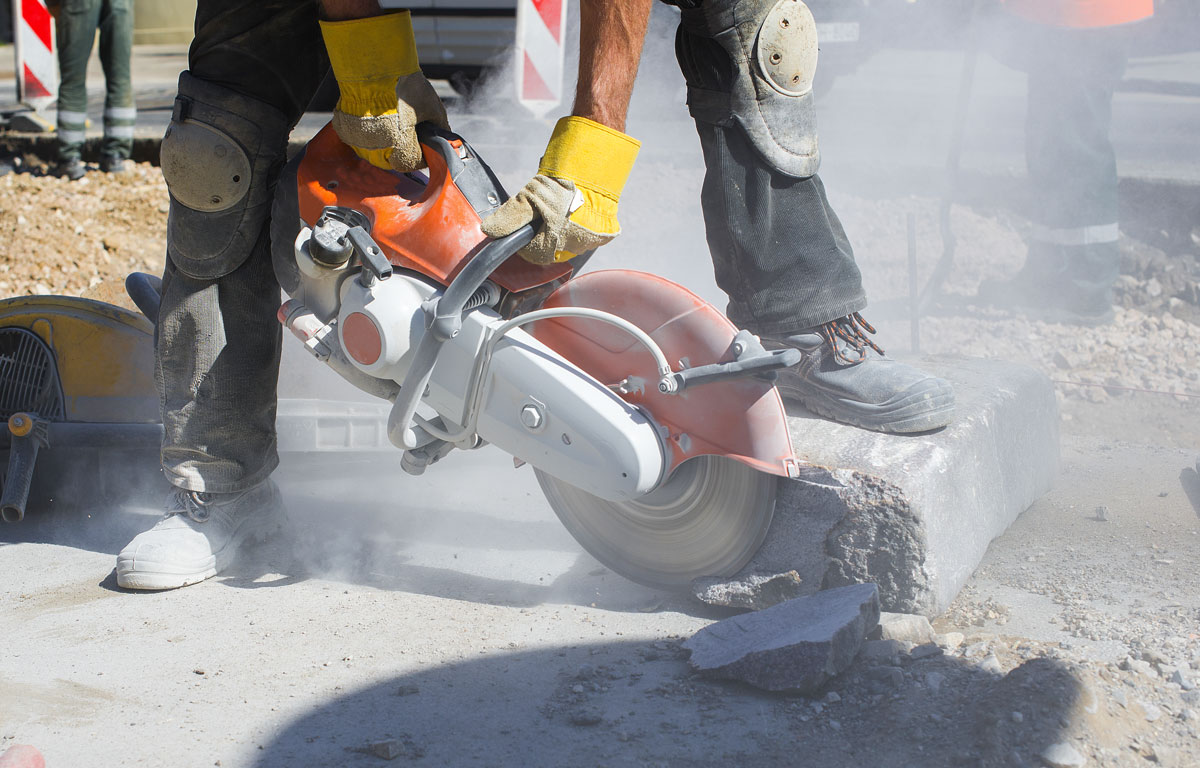
The repair process typically begins with sawcutting the perimeter of the damaged area to create clean, vertical edges that prevent feathering. The existing concrete must be sound, with all loose material removed and the substrate roughened to a profile that promotes a mechanical bond. Reinforcing steel, if exposed, should be cleaned of corrosion to ensure long-term stability. Saturating the prepared area with water before placement—achieving a saturated surface dry (SSD) condition—ensures that the dry substrate does not rob moisture from the repair material during curing, which is critical for maintaining the intended strength of the patch.
Developing a Comprehensive Repair Strategy
Successful crane rail rehabilitation requires more than selecting the right materials. It demands a systematic approach to assessment, preparation, and execution. Before any repair work begins, the maintenance team should conduct a thorough survey of the entire runway. This survey should document the location and severity of all defects, the condition of anchor bolts and rail clips, and any evidence of ongoing movement or misalignment. Laser surveying equipment can establish the precise geometry of the existing rail, identifying high and low spots that affect crane operation.
The repair sequence should address the root cause of deterioration, not merely its visible symptoms. If poor drainage is channeling water toward the runway, regrading or installing drainage features should precede foundation repairs. If thermal expansion joints are missing or have failed, allowing the rail to impose excessive stress on the grout during temperature swings, the joint system should be reinstated. If anchor bolts have corroded or lost preload, they should be replaced or retensioned.
Repair scheduling requires close coordination with operations. The ideal window is one that minimizes impact on chip inventory while providing sufficient time for materials to cure before the crane returns to service. For large-scale repairs that cannot be completed in a single shift, temporary crane restrictions may be necessary, with speed limits or load reductions applied to protect partially cured sections.
Quality control during placement is essential. Epoxy grouts should be mixed according to manufacturer specifications, with attention to resin and hardener proportioning, mixing time, and ambient temperature. Substrate preparation should be verified before placement begins. Curing conditions should be monitored, with provisions for protecting fresh repairs from rain or freezing temperatures if necessary.
The Long-Term Value of Proper Rail Maintenance
By utilizing specialized materials and following disciplined repair practices, engineers and contractors can deliver a foundation repair that is a permanent upgrade to the woodyard’s infrastructure rather than a temporary patch. The investment pays dividends in multiple ways: reduced unplanned downtime, lower long-term maintenance costs, extended crane service life, and improved safety for personnel working around heavy equipment.
A well-maintained crane runway also supports operational efficiency. Rail that is level and true allows the crane to travel at higher speeds with less wear on wheels, motors, and braking systems. Consistent rail geometry improves load positioning accuracy, reducing cycle times and the risk of inventory damage. Over years of service, these incremental gains compound into substantial productivity improvements.
The chipper may be the heartbeat of the woodyard, but the crane runway is the circulatory system that keeps material flowing. Protecting that infrastructure with the right repair approach ensures the mill can maintain its production rhythm through decades of demanding service.