


Epoxy compounds — especially epoxy putties and pastes — are among the most effective materials for repairing metal surfaces. From sealing cracks and holes to rebuilding corroded steel, these products offer a reliable solution for both temporary fixes and long-term repairs. Whether you’re working in a fabrication shop, a plant maintenance team, or field service, knowing the difference between epoxy types is critical.
In this guide, we’ll break down the key categories of industrial epoxy for metal repair, their use cases, and what to consider for high-performance repairs.
1. Metal-Filled Epoxy Paste
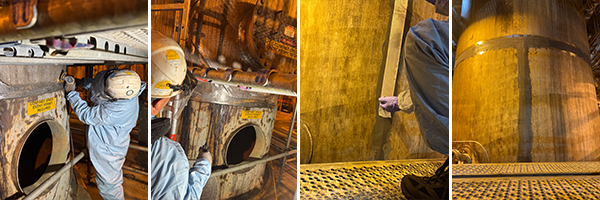
What it is: Metal-filled epoxy pastes are two-part systems that combine resin, a hardener, and metal powders. These materials deliver high compressive strength and excellent thermal and mechanical resistance. Compared to putties, they’re more fluid and are often brushed or rolled into place.
Best used for:
- Large surface restoration
- Corrosion barrier applications
- Repairs that require good surface leveling or reinforcement
Application Example – Stainless Steel Tank Weld Repair. A stainless steel tank showed multiple weld seam failures after decades of chloride exposure. Traditional weld repairs triggered stress cracking beyond the original defects. Using Sylmasta cold-bonding epoxy — including Titanium Supergrade HT, Ceramic Supergrade, and Wearshield 5 Minute — the team rebuilt the surface and restored tank integrity without additional stress.
2. Epoxy Putty for Crack and Hole Repair
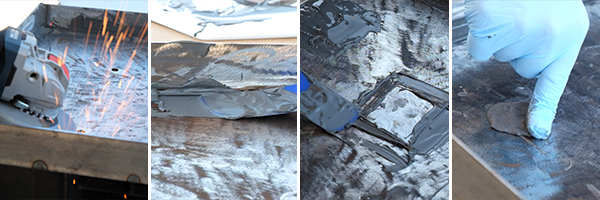
What it is: Epoxy putties are moldable, hand-applied materials used to rebuild damaged metal, plug leaks, and restore structural surfaces. Some types are machinable, waterproof, or even formulated for use underwater.
Best used for:
- Filling holes or pitting
- Pipe and valve sealing
- Repairs in wet or submerged conditions
Application Example – HVAC Pan Corrosion Repair. A commercial HVAC unit developed corrosion in the drain pan, blocking proper drainage and causing rooftop water pooling. A simple application of AB Universal Putty, Superfast Epoxy Stick, and Industrial Metal Rapid 5 Minute Epoxy Paste restored drainage functionality and sealed the corroded metal.
3. Cold Bonding and Coating with Epoxy Ceramics
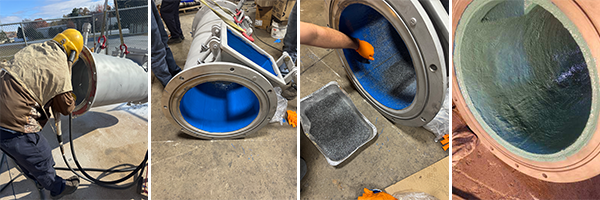
What it is: Cold-bond epoxy adhesives are liquid systems designed to bond metal-to-metal without heat. Many formulas offer high temperature resistance, abrasion resistance, and chemical durability, making them useful as coatings as well.
Best used for:
- Rebuilding or reinforcing metal housings
- High-temperature or high-abrasion environments
- Industrial coatings for corrosion and impact protection
Application Example – Ball Mill Interior Coating. A worn ball mill faced heavy abrasion, threatening operational uptime. Replacing the unit was costly. Instead, the interior was restored using Ceramic Brushable Epoxy Coating. The result was a protective layer that resisted future wear and prolonged service life.
Whether you’re sealing weld cracks, restoring HVAC equipment, or rebuilding heavy-duty industrial components, choosing the right epoxy type is key. Metal-filled pastes, moldable putties, and cold bond adhesives all serve different roles — and selecting the correct one can make the difference between a quick patch and a long-term fix.