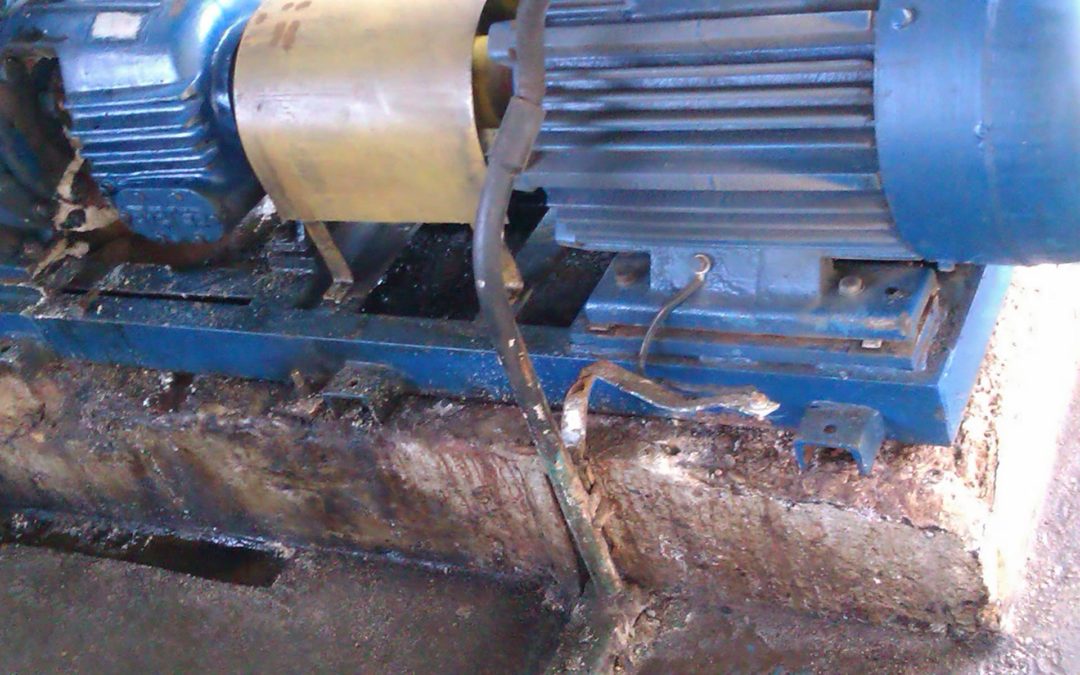
In heavy industrial environments, pump foundations are under a constant state of siege. Between normal operating vibration and the presence of highly aggressive chemicals, these concrete bases often deteriorate long before the equipment they support. While the...
Concrete is one of the most durable building materials we have, but it’s not invincible. Acids eat away at it. Chlorides work their way in and corrode the rebar. Moisture finds every crack and pore. Left unprotected, even well-placed concrete will eventually...
Concrete serves as the foundation of industrial operations — literally and figuratively. From plant floors to equipment foundations and secondary containment systems, it’s the workhorse material that keeps facilities running. Its versatility and...
When restoring and protecting pump foundations, you can use the same chemical resistant patching materials (mentioned in our guide “Product Selection Guide for Chemical Resistant Concrete Repair Materials”) in one step. You can use those same materials you used to...
Basic Chemical resistance of repair materials: Material Chemicals Resistant to Temperature Traffic and Abrasion Resistant to Ultraviolet Light Epoxy Grout General, mild acids and caustics 150 F yes No Novolac Polymer Concrete Sulfuric acid 180 F yes No Vinyl Ester...
In many industrial and construction environments, time is a luxury you don’t have. Whether you’re working on a critical infrastructure repair or trying to stay ahead of a tight project schedule, shutting down operations for extended curing, surface prep, or...
Protective systems for concrete can be as simple as a thin film coating or as intricate as a multi-layered reinforced system. In most cases, you get the protection you pay for. More complicated means more expensive and usually better protection. But a higher level of...
Whether you’re in need of technical help or are looking for a product or piece of equipment you can’t find, we’re always happy to point you in the right direction.